Global report on neglected tropical diseases 2026

Global report on neglected tropical diseases 2026

Isaias Montilla
An older woman sitting in a hammock listens as community members show her how to reduce Chagas transmission, Mérida, Mexico.
© Credits

Global report on neglected tropical diseases 2026
Mid-term evaluation of the road map implementation

The year 2025 marked the midpoint of Ending the neglect to attain the Sustainable Development Goals: a road map for neglected tropical diseases 2021–2030. This fourth edition of the global report therefore presents the results of the mid-term evaluation of the road map. It reviews implementation and impact during 2021–2025 and sets out strategic priorities for 2026–2030, across all 21 NTDs and disease groups now in the road map, including noma, added in December 2023. A summary presentation of the mid-term evaluation is also available.

Like previous editions, the report also takes stock of the latest year. It analyses data submitted to WHO for the 2024 reporting period, and partial 2025 data where available. For cumulative indicators, such as countries achieving elimination, it reports status as of June 2026.

The report assesses progress on the road map’s 4 overarching and 10 cross-cutting indicators. Each is measured by its direction of change since the reference year and its distance from the 2030 target, giving a picture of where the NTD response stands at mid-point as a whole.

The report also includes updated summaries for each disease and disease group, 26 in all, with separate summaries for distinct forms or conditions within a group. Each covers epidemiology, core strategic interventions, road map indicators, geographical distribution, risks that require mitigation, as well as a gap assessment comparing current status with the 2020 baseline.


Cover of the NTD report 2026
This report presents the mid-term evaluation of the road map for neglected tropical diseases 2021–2030. It assesses implementation and impact during 2021–2025...
Cover of the NTD report 2026 executive summary
This summary presents the key findings of the mid-term evaluation of the road map for neglected tropical diseases 2021–2030. It outlines the main risks...


WHO
School children happiness in rural areas in one of the three districts of the Kédougou region endemic for Onchocerciasis after more than 10 years of ivermectin-based MDA.
© Credits

Key facts about the report


The mid-term evaluation at a glance


The evaluation examined whether action along the road map’s 3 pillars has contributed to measurable progress towards the 2030 targets. It combined quantitative analysis of 71 global indicators reported by Member States with a structured qualitative assessment of the road map’s 11 dimensions. That assessment used the Gap Assessment Tool (GAT) and drew on more than 350 experts, programme managers, policy-makers, researchers and partners. The evaluation was coordinated by WHO, with high-level input from an external Oversight Committee, and its results were reviewed by the Strategic and Technical Advisory Group for Neglected Tropical Diseases (STAG-NTD).

The report sets out:

  • progress since baseline across the road map’s indicators
  • 5 years of strategic shifts in normative guidance, medicines and diagnostics, supply chains, integration, equity, financing and country ownership
  • 5 main risks to reaching the 2030 targets, with the mitigation measures under way
  • 10 strategic priorities for 2026–2030, and early considerations for a post-2030 agenda


A quantitative assessment of the 4 overarching and 10 cross-cutting indicators, measuring the direction of change since the reference year and the distance from each 2030 target.


A qualitative review of 5 years of action under each road map pillar: (i) accelerate programmatic action, (ii) intensify cross-cutting approaches, and (iii) change operating models and culture to facilitate country ownership.


A section on progress in each of the 6 WHO regions, and 26 updated disease summaries, each with a gap assessment against the 2020 baseline.


Key facts about progress, 2021–2025


Overall progress since baseline


  • The number of people requiring interventions against NTDs fell to 1.41 billion in 2024: a 36% reduction since 2010 and 19% since 2020.
  • By June 2026, 63 countries had eliminated at least one NTD, up from 42 at the end of 2020, and 90 acknowledgement processes had been completed. Togo became the first country to eliminate four NTDs.
  • The integrated treatment coverage index for preventive chemotherapy reached its highest value since 2020, and 43 countries have adopted integrated strategies for skin NTDs, exceeding the 2030 target of 40 six years ahead of schedule.
  • More countries have integrated NTDs into national health strategies, essential service packages and disability management guidelines.
  • Nevertheless, most indicators remain below the 2030 targets. Disability-adjusted life years fell by 18% between 2015 and 2021 but have since stagnated. Neither eradication programme (dracunculiasis and yaws) is on track. Deaths from vector-borne NTDs have increased, although the case fatality rate for dengue has decreased. Only a minority of endemic countries report on all their relevant NTDs or report gender-disaggregated data, access to WASH in endemic areas remains below universal coverage, and adoption of guidelines has generally outpaced implementation.

Progress across the pillars and diseases


  • Programmatic action: WHO has released about 260 NTD publications since 2021. New tools have begun to reach programmes, including the paediatric praziquantel formulation arpraziquantel, prequalified dengue vaccines, approved chikungunya vaccines and simplified oral treatments for human African trypanosomiasis. The diagnostics pipeline has grown to 29 target product profiles across 15 diseases.
  • Integration and cross-cutting approaches: NTD interventions are increasingly co-delivered with immunization, antenatal care, school health and noncommunicable disease services. However, most endemic countries do not yet include them in universal health coverage packages, and collaboration with the WASH sector remains limited.
  • Country ownership and sustainability: more countries are integrating NTDs into national health plans, and some have made initial domestic budget commitments. However, most programmes remain dependent on external financing, which has contracted sharply and is concentrated among a small number of donors.
  • Disease-specific progress: progress is uneven. Only three disease-specific indicators met their 2025 milestone: vaccine development for chikungunya, the case fatality rate for dengue, and the availability of WHO-recommended polyspecific antivenoms for snakebite envenoming. Across the portfolio, the gap assessments point to shared priorities: affordable point-of-care diagnostics, stronger surveillance (including post-elimination and One Health surveillance), sustained access to medicines, and wider use of WASH and vector control.

Risks and priorities for 2026–2030


Five interdependent risks threaten the 2030 targets, all amplified by the financing contraction of 2025: concentrated and declining financing; conflict, displacement and climate change; incomplete integration into national health systems; gaps in diagnostics and medicines; and unmet need concentrated among the populations least served.

The evaluation calls for increasing and institutionalizing domestic financing while sustaining external support, treating conflict and environmental change as structural realities, making integration the default delivery model, embedding specialist capacity in national institutions, funding research through to prequalified products, and treating equity as a design requirement.


Dennis Brussaard / WSPA
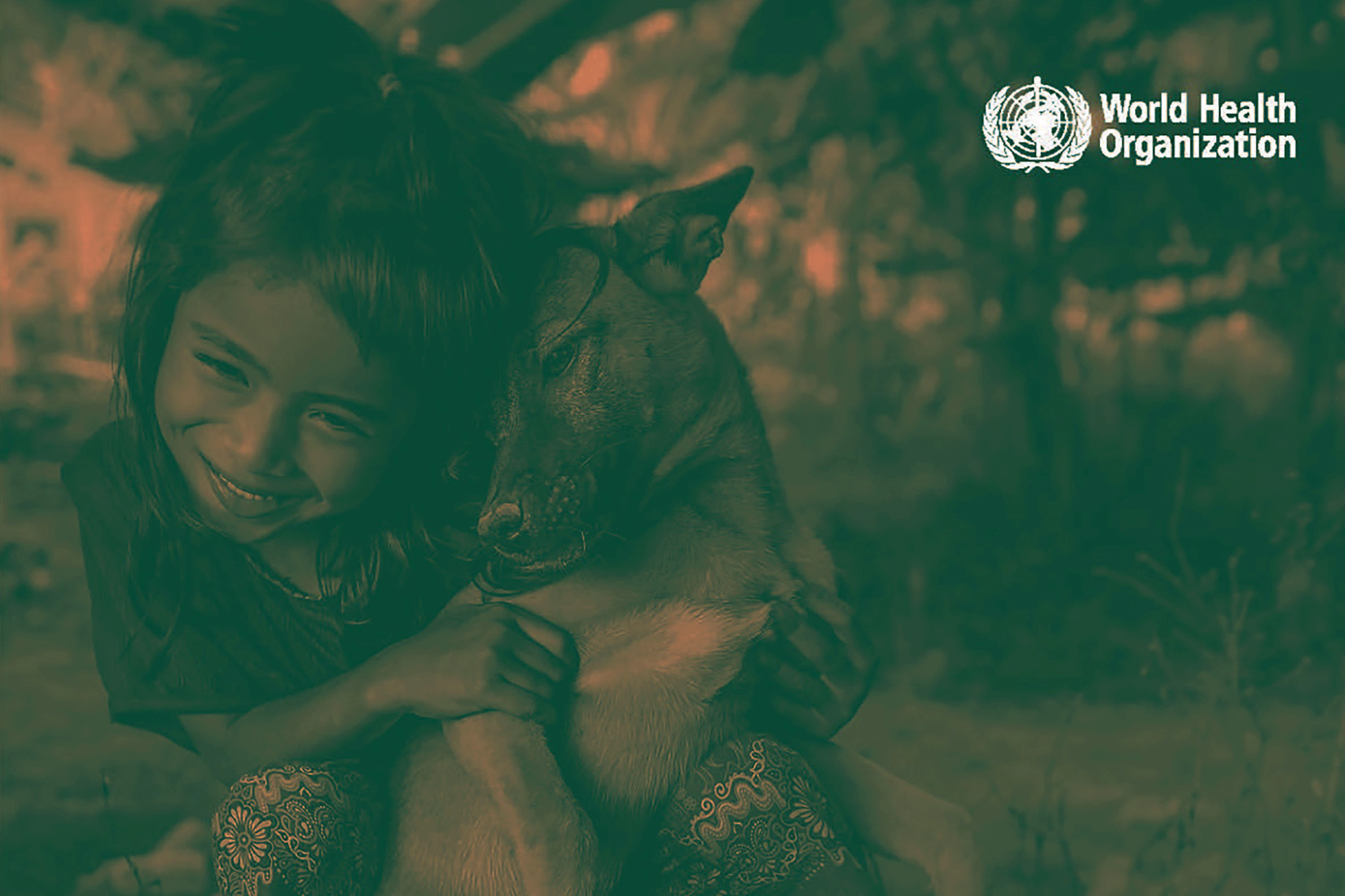
Dog-mediated rabies kills tens of thousands of people every year, many of whom are children.
© Credits