
Kids enjoying together in park
Physical activity
Regular physical activity has been shown to help prevent and manage noncommunicable diseases (NCDs) such as heart disease, hypertension, stroke, diabetes and several cancers. It also helps to maintain a healthy body weight and can improve mental health, quality of life and well-being. Physical activity refers to all movement. Popular ways to be active include walking, cycling, wheeling, sport, exercise, active recreation and play, and can be enjoyed by people of all ages and abilities. Being active at work and undertaking household chores or gardening are other ways to be physically active.
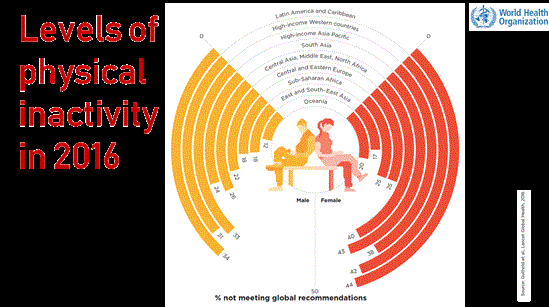
Current global estimates show 1 in 3 adults and 86% of adolescents do not achieve the recommended levels of physical activity. Furthermore, as countries develop economically, levels of inactivity tend to increase and can reach as high as 70%, driven by changing transport patterns, increased use of technology for work and recreation, cultural values and increasing sedentary behaviour.
Sedentary behaviour refers to activities associated with very low energy expenditure such as sitting and watching television. Sedentary behaviour and insufficient physical activity each contribute to poorer health outcomes and place a growing burden on health systems, while also affecting economic development, community well-being and quality of life.
Physical inactivity is one of the leading risk factors for noncommunicable diseases (NCDs) and premature death worldwide. Regular physical activity can reduce the risk of many cancers by 8–28%, heart disease and stroke by 19%, diabetes by 17%, and depression and dementia by 28–32%. An estimated 4–5 million deaths each year could be prevented if people were more physically active.
Women and girls are generally less active than men and boys, contributing to avoidable health inequalities. Older adults and people living with disabilities are also less likely to be active and may miss out on the physical, mental and social benefits of regular physical activity.
Physical inactivity places a growing burden on societies through increased healthcare costs, reduced productivity and missed opportunities for improved health and well-being. WHO's economic analysis predicts that nearly 500 million new cases of preventable major NCDs could occur globally between 2020 and 2030 if physical inactivity levels do not change. These conditions are projected to cost approximately US$ 300 billion in healthcare expenditure alone over this period, equivalent to around US$ 27 billion annually. The estimates do not include wider indirect costs, such as productivity losses.
Failure to increase physical activity levels will hinder progress towards global health targets and the achievement of multiple Sustainable Development Goals (SDGs).
In response to persistently high levels of physical inactivity worldwide, WHO developed the Global action plan on physical activity 2018–2030 (GAPPA): More active people for a healthier world.
WHO supports countries and partners to implement the recommended actions by:
- developing global policies and guidelines, informed by the best available evidence, to support countries in strengthening national policies, investment cases and financing mechanisms that promote physical activity across populations
- providing practical tools and technical resources, including toolkits, training packages and digital innovations that support activities such as walking and cycling, and the integration of physical activity into primary health care. Capacity-building is further supported through WHO Academy courses, workshops and knowledge-sharing activities
- convening and coordinating partners across sectors, including health, sport, transport, education, urban planning and the environment, bringing together governments, UN agencies, civil society, academia and other stakeholders to support policies and environments that enable active lives for all and
- monitoring progress and strengthening surveillance, including implementation of the Global Action Plan on Physical Activity through the Global Status Report on Physical Activity, measurement of physical activity through instruments such as the Global Physical Activity Questionnaire (GPAQ) and the Global School-based Student Health Survey (GSHS), development of global estimates and epidemiological evidence; and guidance on the use of wearable sensor technologies in national health surveys.
WHO regularly reports to the World Health Assembly on progress towards the global target of a 15% relative reduction in physical inactivity by 2030 and on the implementation of key GAPPA milestones.